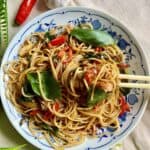
Easy Drunken Noodles Recipe (Spaghetti)
This easy Drunken Noodles recipe, also known as Drunkard Noodles recipe (Pad Kee Mao), uses readily available ingredients, such as spaghetti and canned tuna, but also shares the steps and ingredients to make an authentic version. It's a deliciously quick weeknight dinner, on the dinner table in under 30 minutes! (Despite the name, there is no alcohol in the recipe- the spicy noodles do taste amazing with a cold beer though!)
Servings: 2 people
Calories: 308kcal
Equipment
- Large skillet or wok
- Chopping board and knife
- mortar and pestle Optional, only if you want to pound the garlic and chili.
Ingredients
- 4.2 oz spaghetti (120g)
- 4 cloves fresh garlic In order of preference for processing (first is best): pounding, smashing then slicing
- 1 fresh red chili As above. Use more if you prefer more spice. Do NOT touch your eyes after handling chili!
- 1 stalk vegetables Recommended: bok choy, gai lan (Chinese broccoli), bell pepper etc
- ½ can tuna (1 can is 4.2 oz so ½ can is 2.1 oz) Substitutes: tofu, shrimp, chicken, beef, pork
- 1 Cup Thai basil Or Holy Basil if you can get it. Do not use Italian basil.
Pad Kee Mao Sauce
- 1 Tablespoon oyster sauce Refer to post above for how much more sauce to add if you want to add 3 Cups of vegetables.
- 1 Tablespoon Fish Sauce
- 1 teaspoon Black soy sauce Substitute: dark soy sauce or sweet soy sauce
- 1 teaspoon sugar
Instructions
- Cook the spaghetti or rice noodles, as per the directions on the packet.
- Whilst the spaghetti is cooking, mix the oyster sauce, fish sauce and black soy sauce.
- If a confident cook, do this whilst the spaghetti is cooking. If not, let the spaghetti finish cooking before starting to stir-fry.
- Heat a large skillet or wok over medium-high heat. Once the oil is shimmering (but don't let it get so hot that it smokes), add the garlic and chilies.
- Stir-fry till fragrant for 1-3 minutes, then add the vegetables and tuna. Note: If using other cooked protein, I suggest adding it after the noodles to prevent overcooking. In addition, chicken thighs are less likely to dry out compared to chicken breast.
- Add the noodles followed by the savory sauce, stirring quickly. Note: If the noodles feel dry- I'm pretty sure they will because most of us don't stir-fry quickly enough- add some water or unseasoned chicken stock to loosen things up.
- Add the Thai basil or holy basil, quickly stir, then switch off the fire and plate. (We just want to wilt the Thai herb, not to overcook it!)
Notes
Garnish: I highly recommend a squeeze of fresh lime juice as it'll take the flavor to another level. If you can't get it, add ½ to 1 of teaspoon of rice vinegar or tamarind water when cooking.
Storage: Keep in an airtight container in the fridge. Reheat in the microwave or in a wok after adding 1-3 Tablespoons of water. (Add 1 Tablespoon at a time.)
Note: the nutritional information is an estimate automatically calculated using the WPRM recipe maker and I am not responsible for its veracity.
Nutrition
Calories: 308kcal | Carbohydrates: 55g | Protein: 18g | Fat: 2g | Saturated Fat: 0.3g | Polyunsaturated Fat: 1g | Monounsaturated Fat: 0.2g | Cholesterol: 15mg | Sodium: 1107mg | Potassium: 371mg | Fiber: 3g | Sugar: 7g | Vitamin A: 898IU | Vitamin C: 36mg | Calcium: 62mg | Iron: 2mg