
The best Chili Paste Substitutes for cooking authentic Asian food at home: I've included some non spicy substitutes for those who can't take the heat but love Asian cuisine!
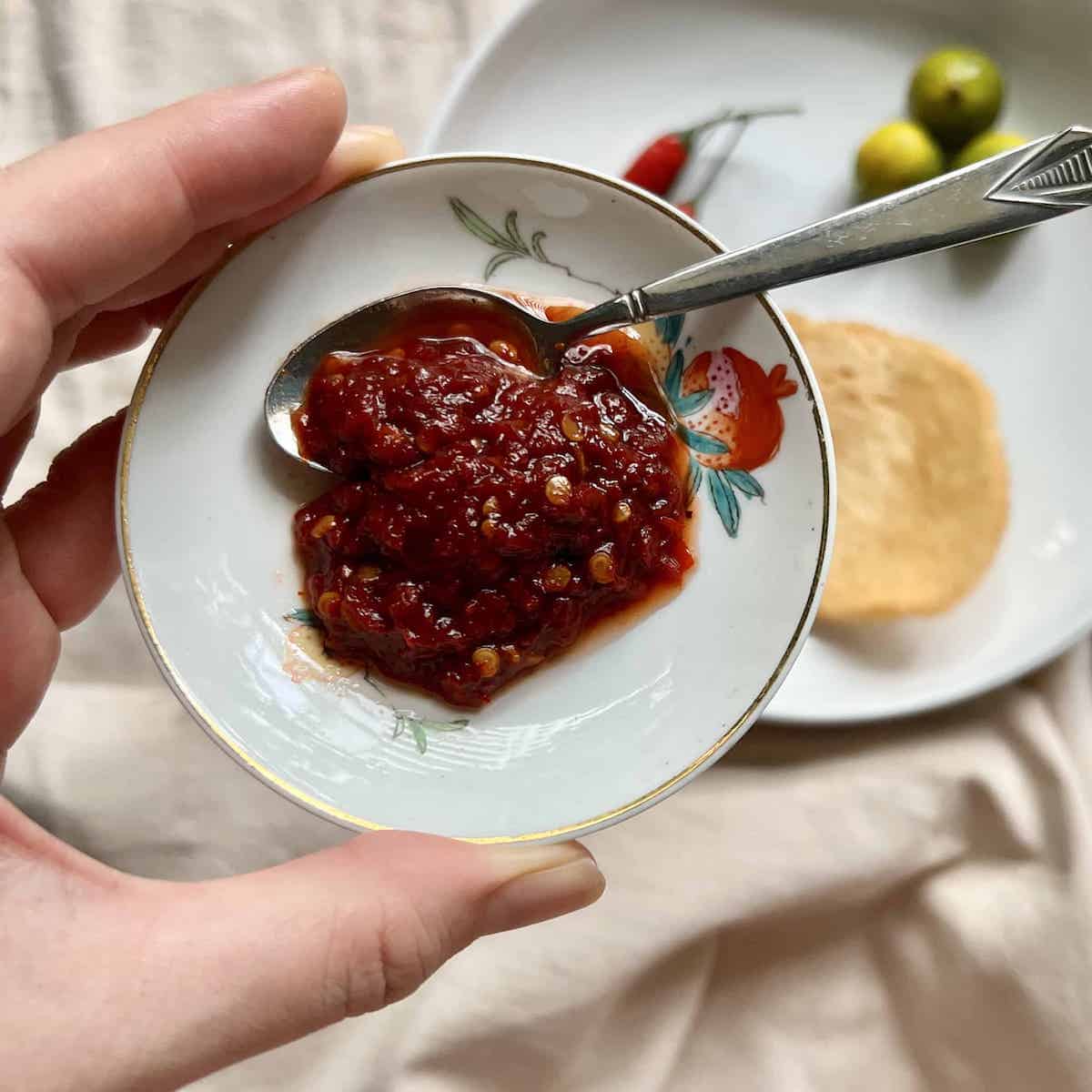
Chili paste is a versatile condiment used in various cuisines to add spiciness, flavor, and depth to dishes. In South East Asia, chili paste is a building block in many recipes such as Mee Siam and other Singaporean dishes- almost every household will have some at home. (You can easily buy unseasoned chili paste in the market.)
Chili paste is traditionally made by pounding fresh or dried chili peppers, sometimes combined with other ingredients such as garlic, onions (shallots in South East Asia), spices, salt and/ or sugar.
So obviously the best substitute for chili paste is to DIY your own by pounding (or blending) chilies- usually large red chilies and not bird's eye chilies are used as the latter is much spicier. (See below for the exact recipe
Tip: remove the seeds if you don't want your chili paste so spicy! AND you MUST NOT touch your eyes if you handle chili or they'll be in a lot of pain!
Substitutes
If you can't pound your own chili paste, here are some acceptable alternatives.
Sriracha Sauce
Sriracha sauce is a popular Thai hot sauce made from a mixture of chili peppers, vinegar, garlic, sugar, and salt.
Its spicy, tangy flavor makes it an ideal substitute for chili paste IF the dish in question goes well with garlic. (Not all chili pastes contain garlic.)
To use Sriracha in place of chili paste, start with a small amount and adjust it according to your desired taste and heat level since the spice level is different.
Red Pepper Flakes + Liquid/ Paste
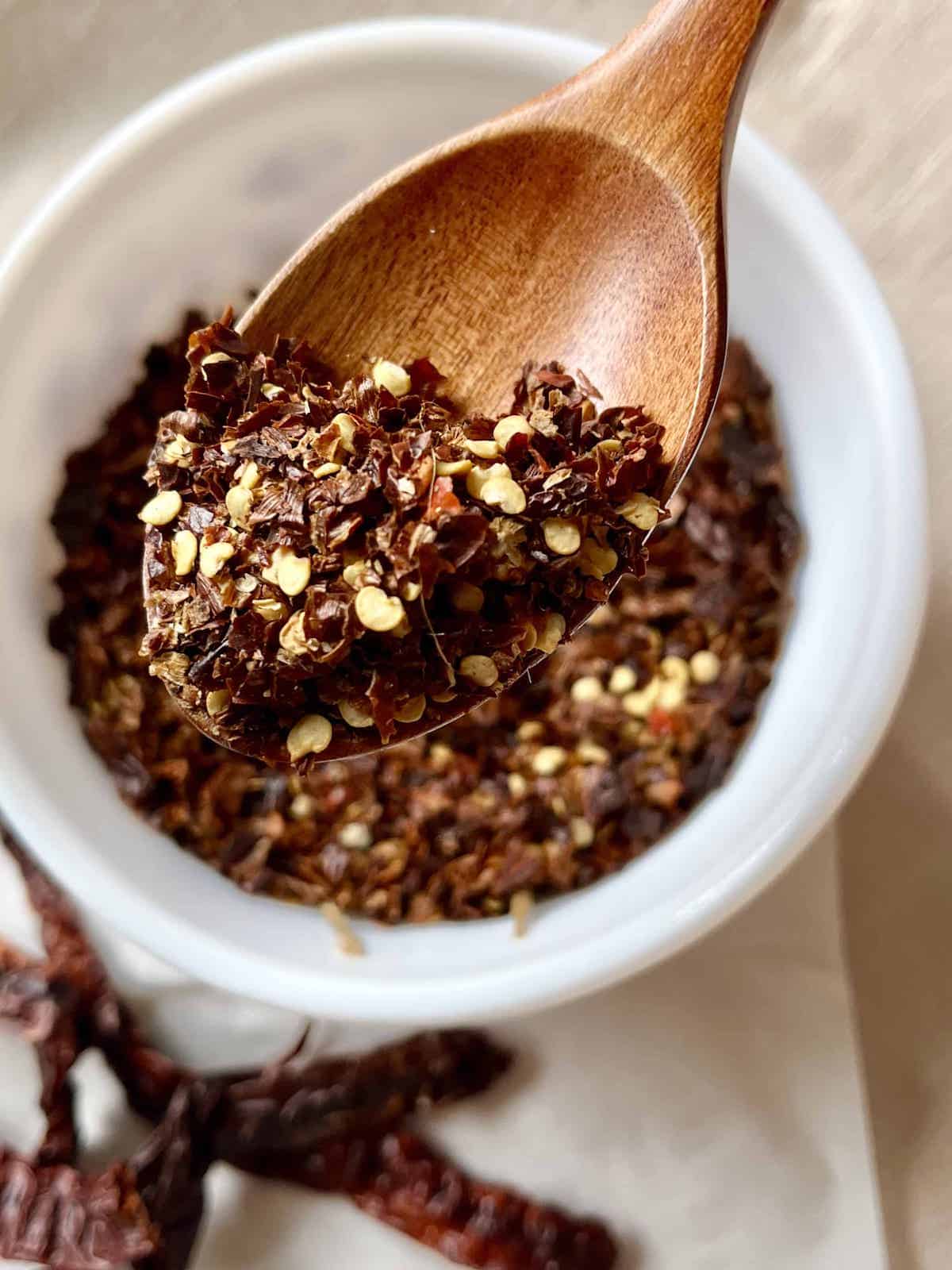
Red pepper or red chili flakes, also known as crushed red pepper, are a simple and readily available alternative to chili paste.
These dried and crushed chili peppers can provide a similar spicy kick as chili paste without altering the texture or consistency of your dish. When substituting with red pepper flakes, begin with a smaller quantity than the required chili paste since their heat can intensify quickly.
Obviously, chili flakes are dry whilst chili paste is wet, so you may want to mix the chili flakes with some water, soy sauce, unseasoned tomato sauce/ paste, or sugar syrup (depending on the recipe in question.)
Hot Sauce
Hot sauce, such as Tabasco or Louisiana-style, is another good substitute for chili paste when looking to add heat to a dish.
Due to the variety available, select a hot sauce with a flavor profile that complements your recipe. Keep in mind that hot sauce usually has a thinner consistency than chili paste, so adjust the quantity accordingly to prevent making your dish too watery. (Alternatively, you can add some tomato paste/ sauce like we did with the chili flakes.)
Tomato Paste + Spices
In some cases, a combination of tomato paste and spices such as cayenne pepper, paprika, or chili powder can serve as a chili paste substitute.
Tomato paste provides a similar texture to chili paste, while the added spices contribute to the heat and flavor. Start with a 1:1 ratio of tomato paste and spices, then adjust the mixture according to your desired taste and spiciness.
Sambal Oelek
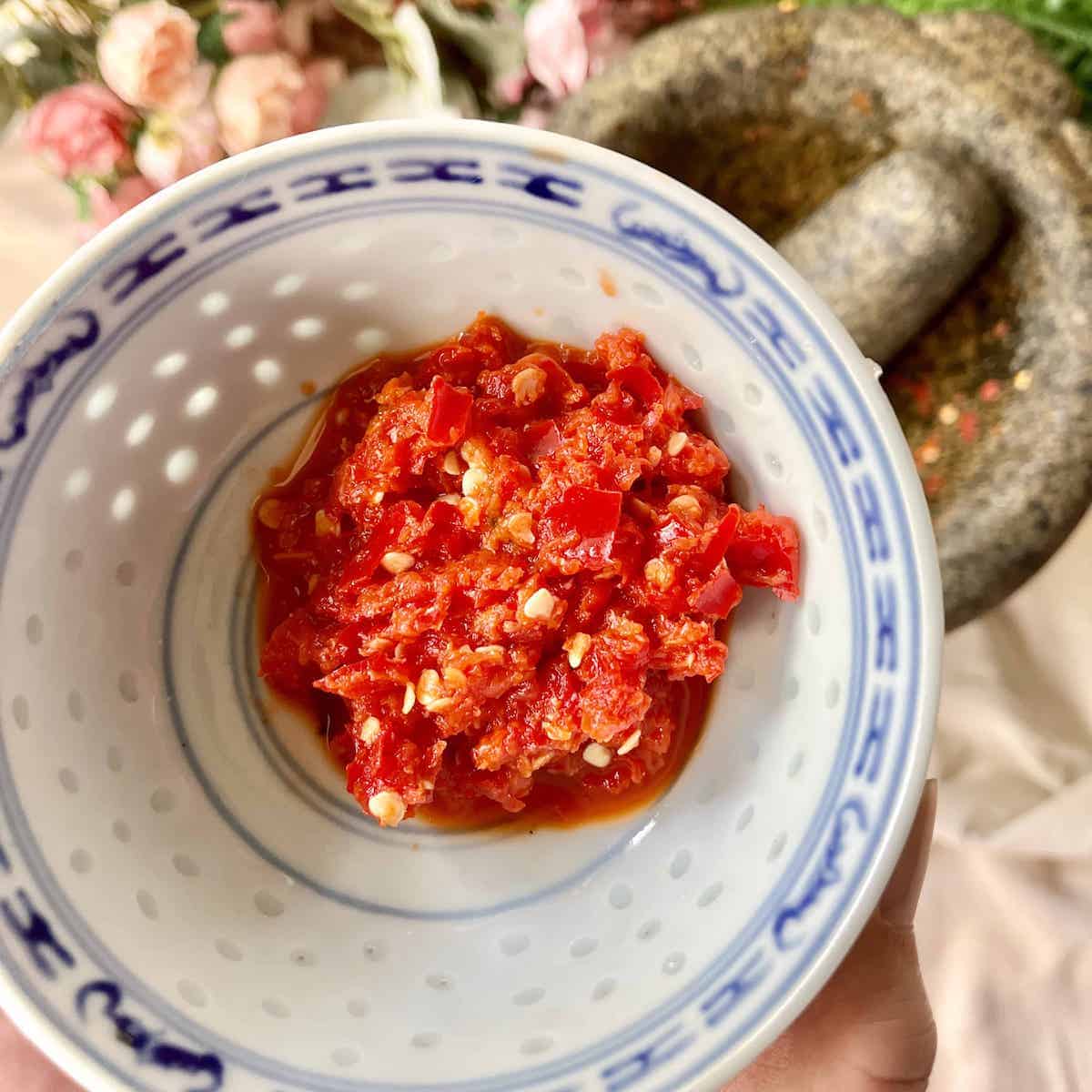
Sambal Oelek is a simple Indonesian chili paste made primarily from fresh red chili peppers, salt, and sometimes rice vinegar or lime juice. It is used in various Southeast Asian dishes like stir-fries, noodles, and marinades, to add a burst of spiciness and acidity to cut through heavy flavors.
Sambal Oelek is a good option for those looking for a more straightforward chili paste substitute without too much additional spices or flavors.
Do not confuse Sambal Oelek with other Sambals such as Sambal Belacan or Sambal Terasi. There are 100s of Sambals, each with a different flavor- Sambal belacan, for example, has a fermented seafood flavor.
How to Substitute
Replace in a 1:1 ratio but if the recipe calls for acid (vinegar, lemon juice, lime juice, etc) omit, then season to taste AFTER adding the sambal. (As the Sambal Oelek is sour on its own.)
Not Great Alternatives
Harissa
Harissa is a spicy red chili paste originating from North Africa, particularly Tunisia. It is made from roasted red peppers, garlic, caraway seeds, coriander, and cumin.
Although it has a different set of ingredients compared to regular chili paste, Harissa can be a decent substitute to add heat and distinct flavors to dishes. It works well in sauces, marinades, and even as a spread for sandwiches.
However, do not use it if you want to the dish to taste authentic!
Gochujang
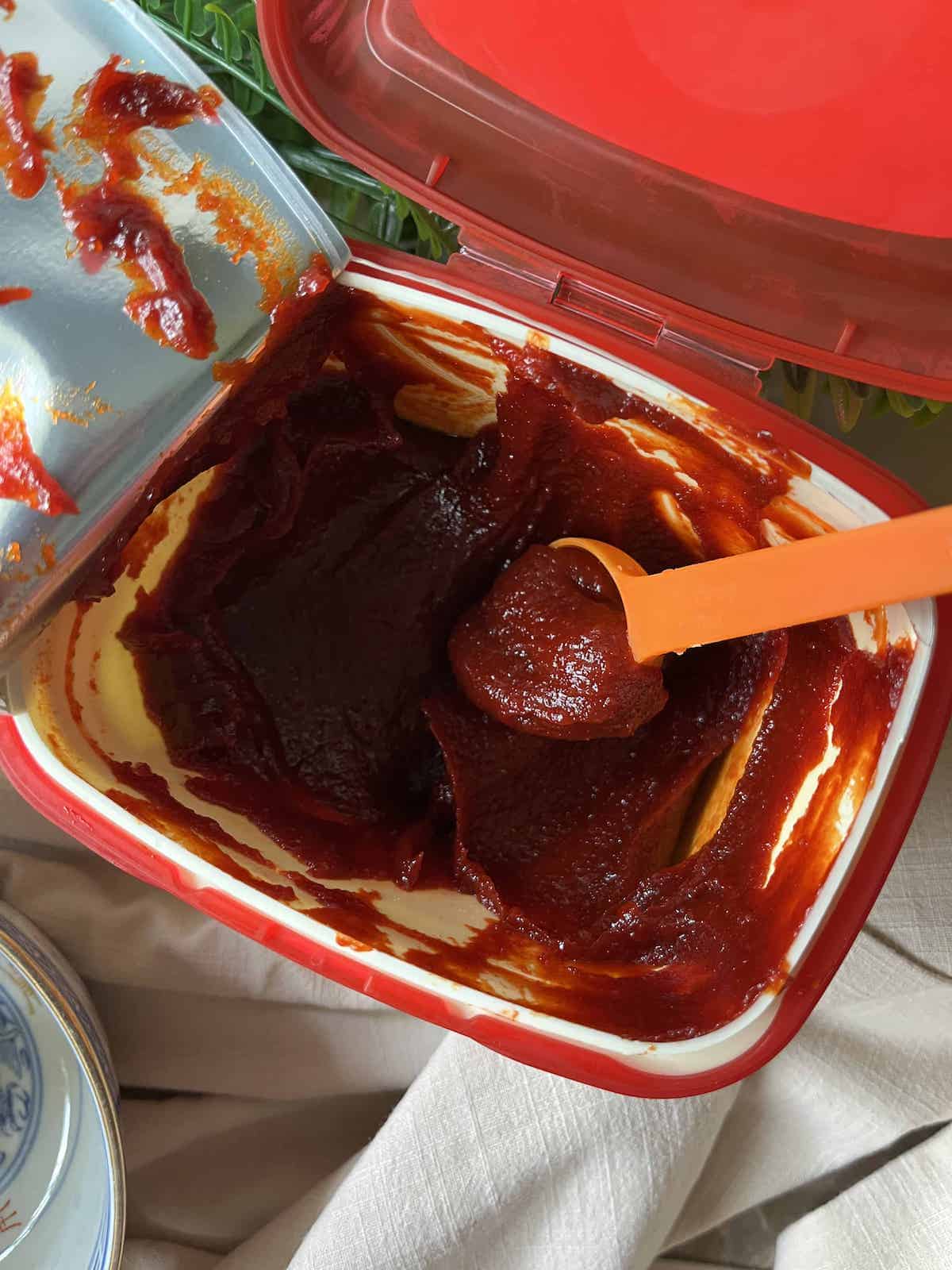
Gochujang is a Korean red chili paste made from fermented soybeans, glutinous rice, and red chili powder (gochugaru.) Its flavor profile is a combination of spicy, sweet, and umami notes
Gochujang is commonly used in Korean dishes such as Korean Pancake and kimchi fried rice. Due to its taste and texture, it can be a great substitute for chili paste in Asian recipes that require heat with a touch of sweetness.
However, as with Harissa, don't use it if you want an exact recreation of the original dish!
Homemade Chili Paste
Making your own homemade chili paste is super simple and allows you to control the heat and flavors according to your preferences.
Ingredients
- 1 cup chili peppers: choose varieties based on your desired heat level, see below for more information
- You can use a mix of fresh chili peppers and dried chili peppers
- 2 cloves garlic, minced
- 1 tablespoon white or rice vinegar
- 1 tablespoon vegetable oil
- 1-2 teaspoons salt (adjust to taste)
- ½ teaspoon sugar (optional)
- First, remove the stems and seeds from the dried chilies and soak them in hot water for 15-30 minutes until they soften.
- Then, drain the chilies and roughly chop them.
- Combine the chopped chilies, garlic, vinegar, oil, salt, and sugar (if using) in a food processor or blender and blend until you achieve a smooth consistency.
- Optional: stir fry the chili paste in oil. If you stir fry it for long enough (till the oil separates and chili paste changes color), it will help extend the shelf life of the chili paste.
Store the homemade chili paste in an airtight container in the refrigerator.
IMPORTANT: remove the seeds if you don't want your chili paste so spicy! AND you MUST NOT touch your eyes if you handle chili or they'll be in a lot of pain!
Which Chili to Use: Heat Levels
One of the advantages of making homemade chili paste is that you can easily customize the heat and flavor to suit your tastes.
Different chilis have different levels of heat, depending on the number of seeds and membranes (the hottest part.) The heat produced by chili peppers is measured using the Scoville scale, which assigns units based on the concentration of capsaicin – the compound responsible for the spiciness.
To adjust the heat level, you can experiment with a combination of different chili peppers, such as:
- Mild
- New Mexico chilies: 500-2500 Scoville heat units
- Ancho: 1000- 2000 "
- Pasilla: 1000- 2500 "
- Cascabel: 1000- 3000"
- Guajillo: 2500- 5000 "
- Medium
- Chipotle: 2500- 8000 Scoville units
- Jalapeño: 2,500 - 8000 "
- Hot
- Serrano: 10,000 - 23,000 Scoville units
- Arbol chilies: 15,000 - 30,000 Scoville units
- Cayenne: 30,000 - 50,000 Scoville units
- Habanero: 100,000 - 350,000 Scoville units
- Thai bird's eye chilies: 50,000 - 100,000 Scoville units
- CAUTION- Extra Hot: I do NOT recommend these: they're so hot, most people can't take it- it can actually raise blood pressure in some people- and will affect the balance of the dish.
- Ghost: 1 million Scoville heat units!!!
- Scorpion: 1.2 million Scoville heat bunts
- Carolina Reaper chilies: can go up to 2.2 million Scoville units
Frequently Asked Questions
It is possible to replace chili paste with curry paste in certain recipes- it should still give you a tasty dish! However,be aware that curry paste typically contains additional ingredients like lemongrass, ginger, garlic, and other spices, which will alter the overall flavor of your dish. Remember to adjust seasoning levels to maintain the desired spiciness and taste.
If you can't take heat, there are non-spicy alternatives to chili paste that can still add flavor to your dishes. Some alternatives would be horseradish, mustard, or a combination of tomato paste with mild spices. Just make sure to adjust the quantities and taste the mixture as you go to ensure you're achieving the right balance in your dish.
Any questions about substitutes for chili paste? Let me know in the comments!
Comments
No Comments