• Skip to primary navigation
  • Skip to main content
  • Skip to primary sidebar
  • Home
  • About Greedygirlgourmet
  • Recipes
  • SEO for Food Blogs
  • Authentic South East Asian Recipes
  • Privacy policy
  • Subscribe
  • Accessibility

Greedy Girl Gourmet

menu icon
go to homepage
  • Recipes
  • Spring
  • Blogging
  • About
    • Facebook
    • Instagram
    • Pinterest
  • subscribe
    search icon
    Homepage link
    • Recipes
    • Spring
    • Blogging
    • About
    • Facebook
    • Instagram
    • Pinterest
  • ×
    Home » Misc.

    Published: Feb 10, 2024 · Modified: Jun 10, 2025 by Zen · This post may contain affiliate links.

    Fish sauce vs soy sauce

    Sharing food makes everyone happy! :)

    • Facebook
    • Twitter
    • Email
    • Flipboard

    A detailed guide to fish sauce vs soy sauce: how to use them in Asian cooking, the similarities, differences, and substitutes.
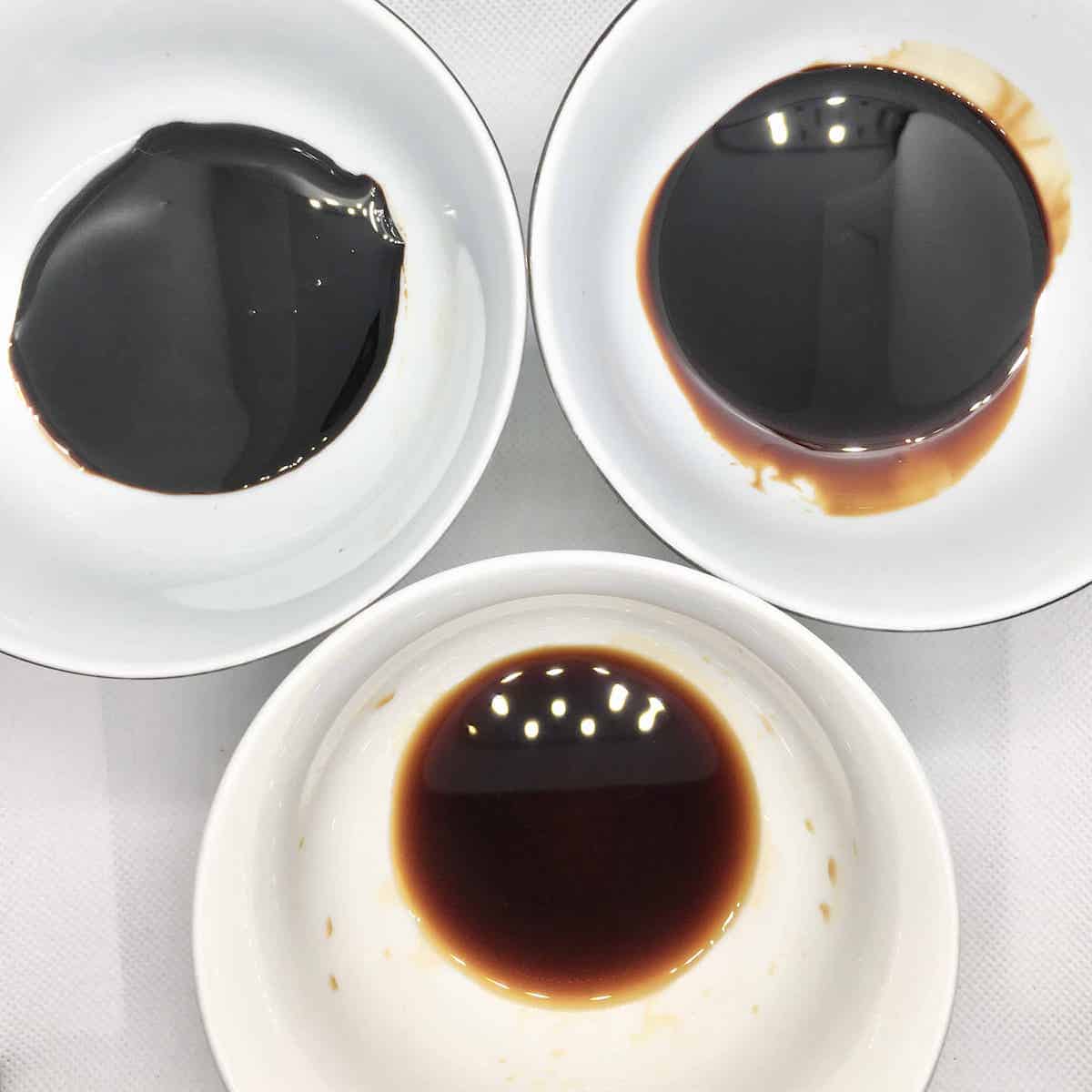
    3 bowls of different Chinese soy sauces.
    3 types of soy sauce
    Jump to:
    • Similarities
    • Differences
    • Fermentation/ Production
    • How to Use
    • Storage
    • Substitutes: Adapting for Allergy and Diet
    • Frequently Asked Questions
    • 💬 Comments

    Similarities

    In Asian cuisine, there are a few basic sauces that can be found in almost every kitchen.

    There's oyster sauce, light soy sauce, dark soy sauce, sweet soy sauce (kecap manis), and fish sauce, to name a few. (The soy sauce we're referring to in this article is the most common one: light soy sauce.)

    Both of these Asian condiments bring a unique savory flavor to the table The fermentation process, whether of soybeans for that rich, salty liquid known as soy sauce or of small fish and salt to give us pungent fish sauce, underscores the diverse culinary landscape of Asia.

    Both add a umami flavor to recipes: Light Soy Sauce tends to be more widely used: you'll see variations of it in Chinese cooking, Japanese food, Korean cuisine (mayak avocado, soy sauce eggs etc), Indonesian recipes, and more.

    Fish sauce is more common in Thai cooking, Southeast Asia, and Korea. It is not as common in China, where it is native to Guangdong and Fujian in the South.)

    Both sauces are similar in that: they are Asian sauces, made by fermentation, with a strong umami flavor.

    Differences

    • Appearance: both are brown, thin liquids, but soy sauce is a little darker in color.
    • Taste: both are salty, but soy sauce can be a little sweet, whilst fish sauce has a brininess similar to anchovies.
    • Smell: Soy Sauce smells more innocuous: deep and savory. Fish sauce has a brininess and almost fishiness that those new to Asian cooking may find overpowering.
    • Ingredients: Soy sauce is made from soy beans and wheat, whilst fish sauce is made from, well, fish and thus contains animal ingredients.
    • In theory, fish sauce is gluten-free but not vegan whilst soy sauce is vegan but not gluten-free. However, manufacturers sometimes add other ingredients, so always check the labelling.
    • Cuisines: Fish sauce is associated with Thailand and Southeast Asia, whilst soy sauce is used widely everywhere from China to Japan.

    Fermentation/ Production

    Soy sauce and fish sauce are made in different ways.

    Soy Sauce

    It relies on the fermentation process over a long time to develop the distinctive flavor.

    For soy sauce, soy beans are the star, undergoing a long-time fermentation with what to break down proteins into savory amino acids.

    Fish Sauce

    Fish sauce boasts a simpler ingredient list- just small fish or shrimp & salt water.

    These components ferment for months, sometimes years, to yield a salty liquid rich in fishy flavor and amino acids, crucial for Thai cuisine and Southeast Asian cuisine.

    The basic production process is as follows:

    • catch the small fish
    • salt them
    • ferment them
    • extract the sauce: the first extraction is called the first press.

    Soy sauce and fish sauce have different ingredients. Soy Sauce contains wheat, so is not gluten-free. For fish sauce, it depends: some brands are gluten-free whilst others are not, so check the labelling. (Wheat is not a traditional ingredient in fish sauce, but some companies use it.)

    How to Use

    Fish sauce and soy sauce are both versatile condiments that can be used in:

    • marinades
    • stews
    • dipping sauce
    • salad dressings
    • and stir fries

    Soy Sauce

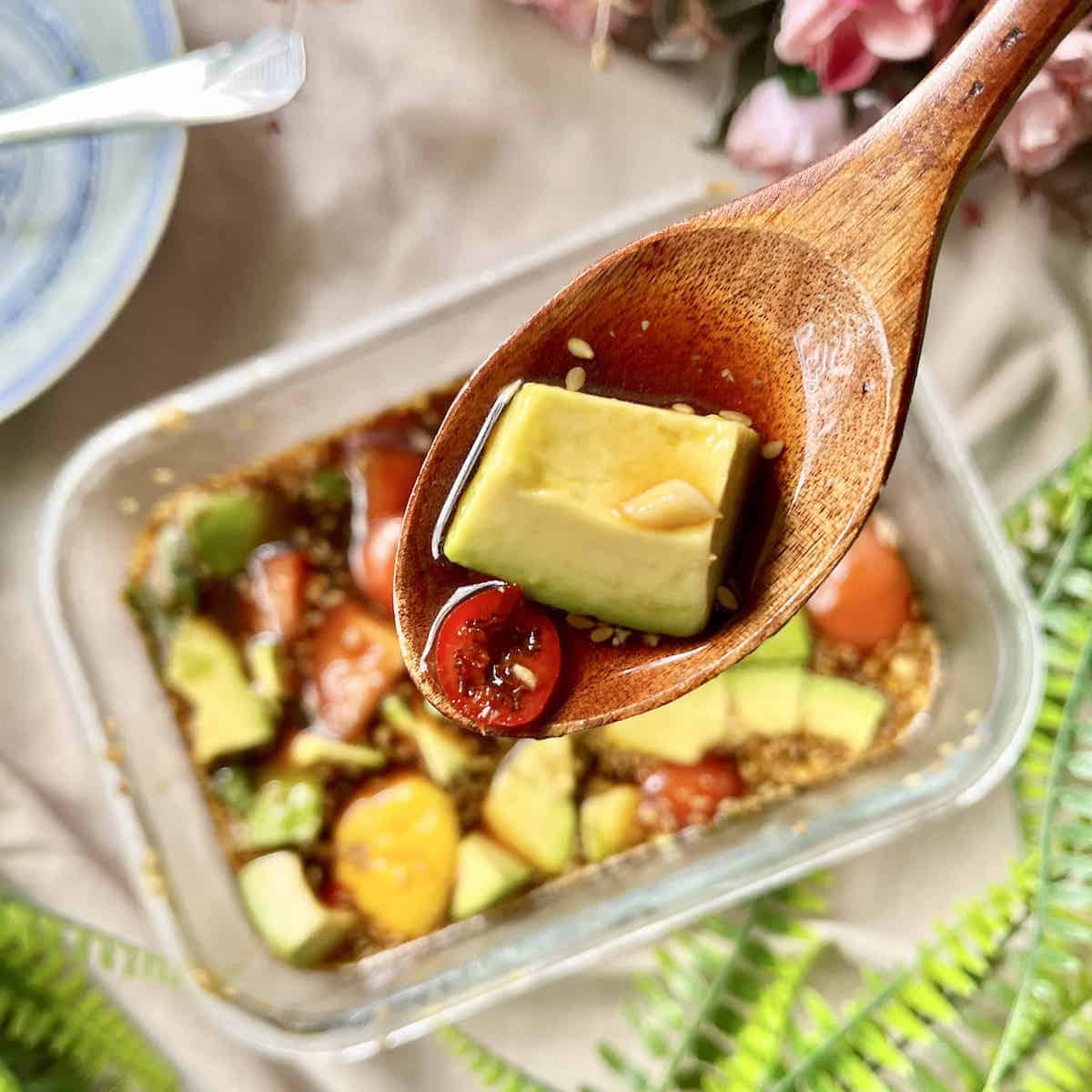
    A wooden spoon scooping up some Mayak Avocado.
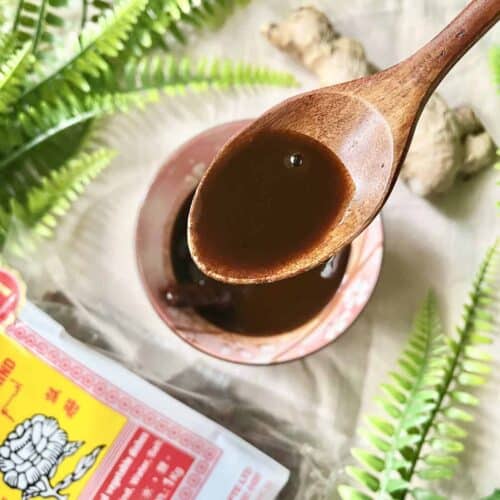
    • A wooden spoon scooping Indian tamarind chutney.
      Easy Tamarind Sauce
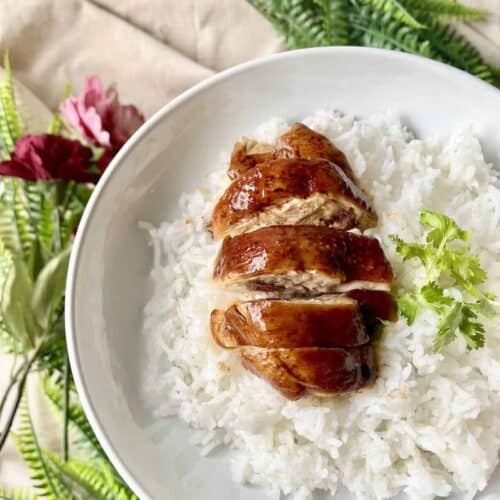
    • A plate of Cantonese soy sauce with white rice and green onions.
      Best Poached One Pot Soy Sauce Chicken
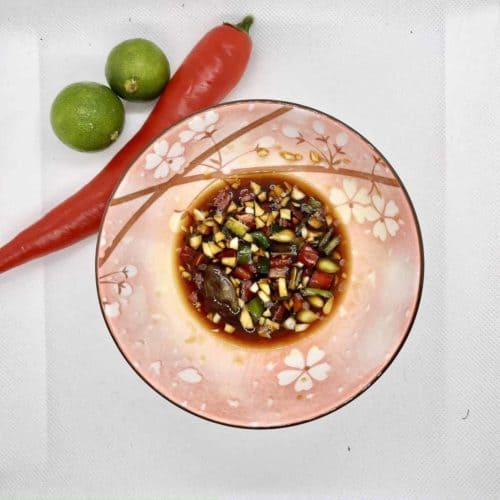
    • A bowl of garlic and chilli mixed with calamansi lime and soy sauce .
      Toyomansi Sauce (Calamansi Soy Sauce)
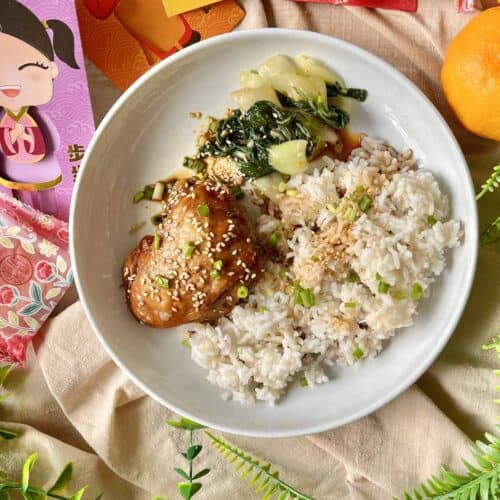
    • Soy Sauce braised chicken thigh with bok choy and rice.
      Easy Chinese Braised Soy Sauce Chicken Thighs
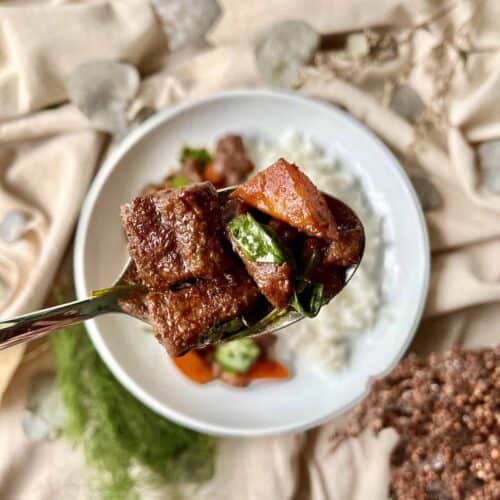
    • Close-up of a spoonful of braised pork shoulder with carrot and coriander.
      Soy Sauce Pork (Braised)
    • Close-up of soy sauce and butter popcorn in a glass jar.
      Soy Sauce Butter Popcorn
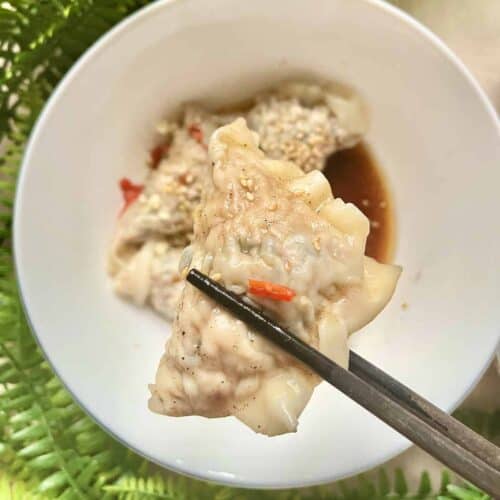
    • Close-up of a fat pork dumpling dipped in a chili soy sauce.
      Chinese Dumpling Sauce (5 min)
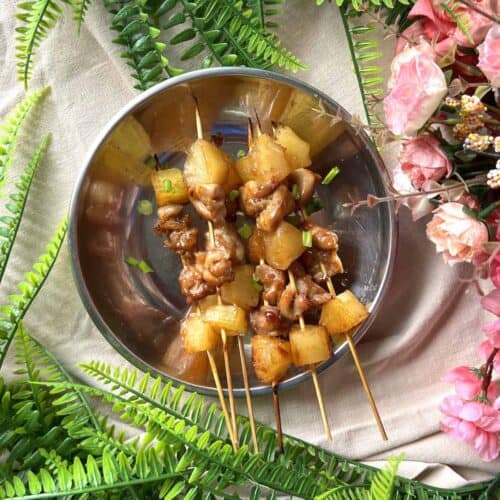
    • Several pineapple teriyaki chicken skewers on a silver plate.
      Teriyaki Chicken on a Stick

    Fish Sauce

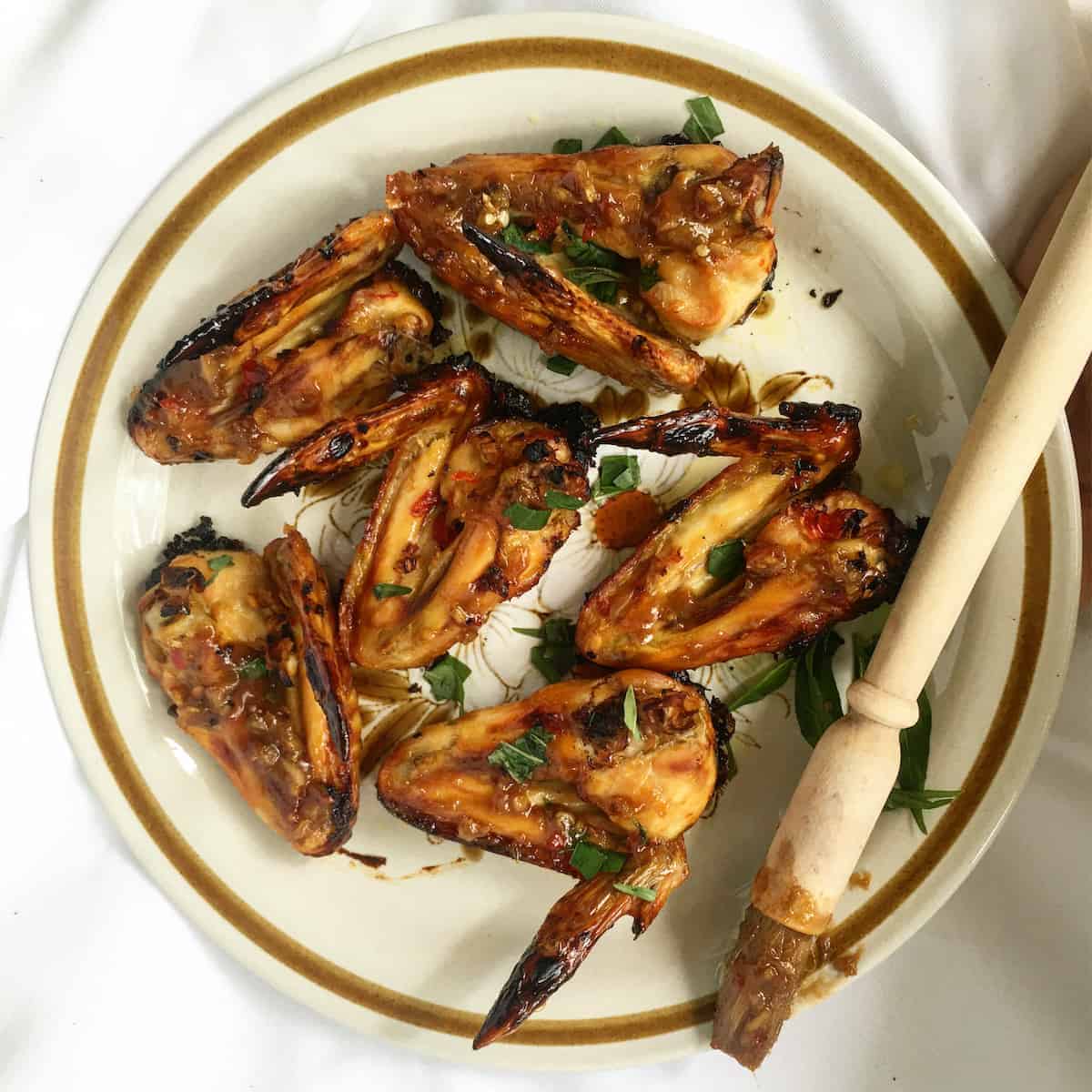
    6 baked vietnamese fish sauce chicken wings on a vintage plate.

    Asian fish sauce goes very well with lime juice. The most classic use of fish sauce is in pad thai.

    Since it's such a staple in Southeast Asia, it's often paired with coconut milk, sambal, and more.
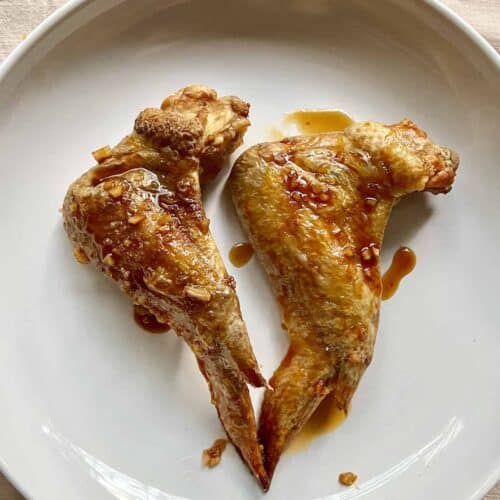
    • 2 baked chicken wings that are super crispy and have been tossed in a sticky Vietnamese glaze.
      Crispy Fish Sauce Chicken Wings (Baked)
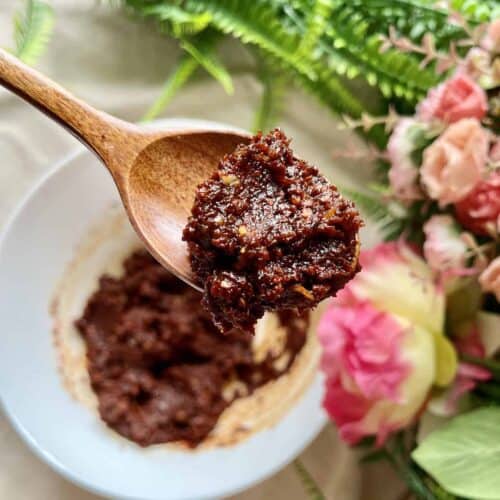
    • A spoonful of homemade Korean Gochujang Paste.
      Korean Gochujang Sauce (5 min)
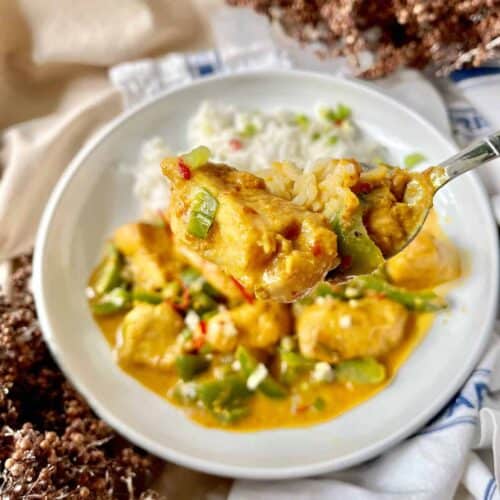
    • Close-up of a white plate of tamarind fish curry with coconut and rice.
      Singapore Tamarind Coconut Fish Curry
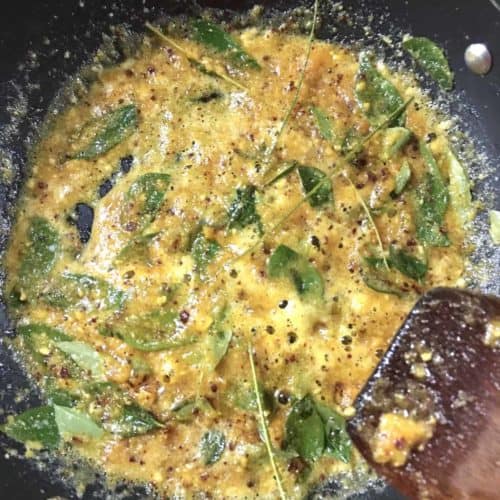
    • Bubbling salted egg yolk sauce in a pan.
      Salted Egg Yolk Sauce Recipe

    Storage

    Both fish and soy sauce do not need to be refrigerated after opening. Store in a cool, dry and dark place.

    Substitutes: Adapting for Allergy and Diet

    Adhering to a vegan diet or managing a fish allergy does not mean you need to miss out on the complex flavors of Asian cuisine. Excellent substitutes exist! 

    Soy Sauce Alternatives

    3 bowls of different Chinese soy sauces.
    From top left in a clockwise direction: naturally fermented dark soy sauce for over 1 year (the best type), Lee Kum Kee (LKK) regular dark soy sauce and LKK light soy sauce. All 3 were swirled in the bowl, you can see the naturally fermented, 1 year old sauce is the thickest as there are no splash marks (it also has the deepest molasses flavour), whilst the light soy sauce is more like water in consistency.

    If you need a gluten-free replacement for soy sauce,

    • Coconut aminos serve as a fantastic stand-in with their slightly sweet, savory profile. They offer a complexity akin to traditional soy sauce but without the soy or fish products, catering to those avoiding soy beans or fish sauce. 
    • Another option is Japanese tamari.
    • For more light soy sauce substitutes, click here.

    Fish Sauce Substitutes

    Personally, I've never found a good fish sauce substitute that can add the same brininess and umami:

    • I guess soy sauce/ tamari/ coconut aminos and sea salt can be used, but the resulting dish won't be quite the same. I'd only recommend it if you're serving someone with a fish allergy. (I also plan to experiment with mixing soy sauce with anchovies.)
    • Worcestershire sauce actually contains anchovies, so some use it as an alternative. However, it's much too tangy to be a good replacement.
    • Some people suggest using a kelp-mushroom soy sauce as a vegan fish sauce- I've tested it, but it tests NOTHING like fish sauce.

    Frequently Asked Questions

    What brand of Fish Sauce should I use?

    For generic cooking, a good choice is Thai Squid Brand fish sauce. When I want to splash out, I use Vietnamese Red Boat (very pricey as it's first press sauce.)

    What brand of Chinese soy sauce should I use?

    Lee Kum Kee is one of the most commonly used brands, which I use for everyday cooking. I also keep a bottle of soy sauce that has been naturally fermented for over 12 months, for important dinners. (I use the Singaporean Nanyang and Kwong Woh Hing brands.)

    Does fish sauce go bad?

    Fish sauce has been fermented, so it can keep for ages if stored properly. However, throw it out if the smell changes, or if you see mold. (Salt sometimes crystallizes at the bottom or the mouth of the fish sauce bottle- it is still good to use!)

    How much fish sauce to use?

    If your recipe does not state how much fish sauce to use, keep in mind that this liquid condiment is very salty. Add it sparingly, tasting as you go.

    Is fish sauce gluten-free?

    It varies from brand to brand. Some are and some aren't so always check the label.

    For more information on soy sauce vs fish sauce, let me know in the comments!
    I have other recipes you may like here! :)

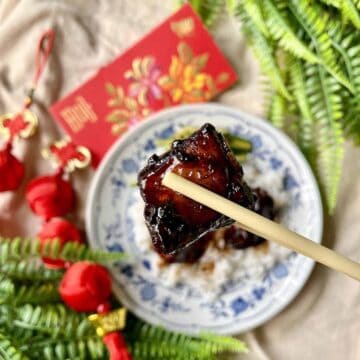
    • Close-up of a pork rib with fingerlicking sticky sauce and caramelised bits.
      What to Serve with Asian Sticky Ribs (27 ideas)
    • A spoonful of Thai Basil Chicken with capsicum, red chilies, and rice.
      11 Quick Thai Recipes for Lunch (under 30 minutes)
    • Someone holding a platter of sambal oelek chili sauce.
      Chili Paste Substitutes for Asian Food (+Non Spicy Ideas)
    • Using a fork to pick up chicken lo mein spaghetti noodles and bok choy.
      35 Best Lo Mein Side Dishes

    Reader Interactions

    Comments

    No Comments

    Leave a Reply Cancel reply

    Your email address will not be published. Required fields are marked *

    Recipe Rating


    Primary Sidebar

    Greedygirlgourmet eating 2 sandwiches in Scotland

    Hi I'm Zhen also known as GGG! I couldn't boil water till I was 18! However, I love creating community and nurturing people, so when I lived abroad (in St. Andrews then London) for 11 years, I started hosting regular parties for friends, and that's how I started cooking and helping out in professional kitchens. (Couldn't cook before that!) I even organised a supper club for charity (which strangers came to!) Learning to cook late, I make sure my recipes go into enough detail for those new to Asian cuisine or who love a test kitchen approach to cooking!

    More about GGG ->

    Christmas Dinner Party

    • Dipping a Chinese meatball into a bowl of spicy mayo,
      25 Asian Christmas Party Appetisers
    • A few very pretty granola bars tied up with parchment paper and string scattered amongst holly leaves
      41 Homemade Christmas Food Gifts 2025
    • 3 Bao Buns next to a bamboo basket with 3 steamed buns.
      39 Asian & Chinese Christmas Recipes
    • 4 Japanese baked sweet potatoes on a plate.
      17 Asian Potato Recipes Side Dishes 2025

    Quick Dinners

    • Close-up of a plate of spicy Thai basil spaghetti.
      Easy Drunken Noodles (Spaghetti Pad Kee Mao)
    • A wooden spoon picking up some Japanese teriyaki shrimp stir fry.
      EASY Teriyaki Shrimp Stir Fry (20 Min)
    • Many chicken lettuce wraps on a white plate.
      Vietnamese Chicken Lettuce Wraps (25 min)
    • A plate of Chinese lo mein spaghetti noodles with green veggies.
      Lo Mein Spaghetti Noodles (Veggies)

    Popular Recipes

    • 3 chicken thighs baked in teriyaki sauce with sesame seeds and green onions.
      Easy Baked Teriyaki Chicken Thighs
    • A wooden chopstick picking up a Japanese chicken teriyaki meatball from a plate of rice.
      Teriyaki Meatballs 照り焼き豆腐ハンバーグ

    Footer

    ↑ back to top

    About

    • About Greedygirlgourmet
    • Privacy Policy
    • Accessibility Policy
    • All Recipes

    Newsletter

    • Sign up here!

    Contact

    • Contact
    • Buy Me a Coffee :)

    As an Amazon Associate, I earn from qualifying purchases :)

    Copyright © 2026 GreedyGirlGourmet

    Rate This Recipe

    Your vote:


    A rating is required
    A name is required
    An email is required